Focus on : Ankle pain

Ankle pain is caused by either Tendinitis, Tendinosis or Achilles Tendon Tears.

Let’s look at Achilles tendon tears :
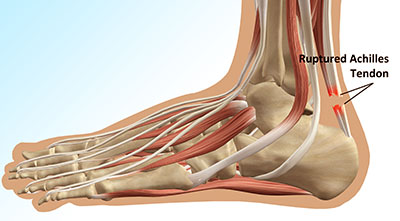
 

What is it?


The Achilles tendon is a band of fibrous tissue located at the back of the ankle. Its main role is to connect the calf muscles to the heel of the foot. This tendon is the largest tendon in the body and when it tightens, as the calf muscles contract, it pulls the heel allowing you to stand on tiptoe or to point your foot.

Achilles tendon tears commonly occur in athletes, however, this injury can affect anyone and surprisingly, a complete tear is actually more common than a partial tear.

These tears are commonly located at the part of the tendon where there is poor blood flow approximately 6cm above its attachment to the heel. Since there is poor blood supply, this part of the tendon is both vulnerable to injury and slow to heal.


What are the Symptoms?


Primarily, an Achilles tendon tear will cause difficulty in activities such as walking, running and jumping. Other signs and symptoms of an Achilles tendon tear include:

  • A loud pop or snap is heard
  • Sudden and severe pain at the back of the calf or ankle
  • Feeling of having been kicked in the calf
  • There is a gap between the tendon and the heel (about 2 inches above the heel)
  • Swelling and stiffness followed by weakness and bruising
  • Difficulty walking particularly during push off
  • Standing on tiptoe may be impossible


 What Causes It?


 Anyone can tear their Achilles tendon if the tendon is subject to excessive force or overstretching, however there are some factors that can increase your risk of injury. The most common activities that cause this injury are running and jumping.

 The Achilles tendon can thin and weaken both as we age and also if it is not used. As a result of this weakening, it becomes prone to injury like tear or rupture with less force or stretching required before an injury occurs. A tear of the Achilles is often observed in people with pre-existing Achilles tendinitis. Other factors such as certain medications including antibiotics and steroids and some illnesses like diabetes and arthritis can also result in weakness of the tendon, increasing injury risk. Being obese is also a risk factor as excess weight puts additional strain on the tendon.


How Can Physiotherapy Help?


Treatment for Achilles tendon tear will depend on the patient’s age, how severe the injury is and the patient’s activity level. For young people especially athletes, they opt to have surgery while older people choose conservative treatments including physiotherapy.

Physiotherapy treatment for an Achilles tendon tear will involve exercises to strengthen the calf muscles and the Achilles tendon and exercises for stability. Many people are able to return to their normal activities within 4 to 6 months. Functional rehabilitation is also part of the program as it focuses on how you coordinate your body and how to move it. The aim of functional rehabilitation is to help you return to your highest level of performance.

None of the information in this newsletter is a replacement for proper medical advice. Always see a medical professional for advice on your individual injury.

Please click here or call Addlife Physio on 0424429976 to book your initial consultation appointment


Focus on rotator cuff tears


What Is It?

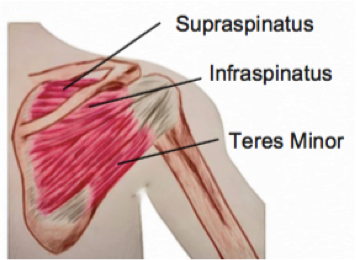
The rotator cuff is a group of four small muscles that surround the shoulder joint. Their tendons attach to the humerus, close to the joint line and act as a cuff that provides support and control to the shoulder. They also play a primary role in creating rotational movements of the shoulder.

Rotator cuff tears are common injuries and can occur in any of the four muscles, usually at their weakest point, which is the junction between the muscle and tendinous tissue. These tears are common in racket and throwing sports and are one of the leading causes of shoulder pain. The prevalence of rotator cuff tears increases as we age due to age related degenerative changes in the tissues.

What are the symptoms?

Many people have rotator cuff tears with no symptoms at all, and are unaware of the injury. However, for others, these tears can be very painful and lead to difficulty moving the shoulder, particularly with overhead activities. They may find their range of movement is restricted and the arm feels weak. They often experience pain that radiates down to the arm and pain at night, which can cause sleep disturbances.

It is interesting to note that the size of a tear is not necessarily related to the amount of pain and dysfunction experienced, with small tears sometimes creating large problems and large tears going unnoticed.

What are the causes?

Movements that create a rapid twisting motion or overstretching of the shoulder often cause rotator cuff tears. The most common mechanism of injury is a fall onto an outstretched hand. These tears can be acute or chronic, developing over a period of time or related to degenerative changes, where tendon tissue is damaged by everyday activities due to reduced strength and elasticity.

Other causes of rotator cuff tears include overuse, lifting or carrying heavy objects and repetitive overhead activities. Poor biomechanics can cause weakening of the shoulder’s tendons with insufficient blood supply to the rotator cuff over a long period of time. This can leave the tendon more susceptible to injury as is a significant contributing factor to the development of tears and the outcomes of recovery.

How can physiotherapy help?

The primary objectives of physiotherapy treatment are to reduce pain, increase range of motion and strength and improve shoulder function. Your physiotherapist will work with you to help set goals assist to reach them with a targeted rehabilitation program, manual therapy and education on how to achieve the most from your recovery.

While severe tears are often repaired surgically, research is increasingly showing that even in severe tears, a comprehensive rehabilitation program under a physiotherapist leads to similar outcomes to surgery. For this reason, a conservative approach guided by a physiotherapist is often recommended to patients as the first option for treatment. The exact time frame of treatment and recovery will vary from person to person and is affected by a variety of factors including if surgical repair was chosen, the severity of the injury and function prior to injury.

None of the information in this newsletter is a replacement for proper medical advice. Always see a medical professional for advice on your individual injury.


Physio Kalgoorlie

When Will My Injury Heal?


When injury strikes, the first thing that most of us want to know is ‘how long will this take to heal?’ Unfortunately, the answer to this can be complicated and requires at least a little understanding of how the different tissues of the body heal. Each of the tissues of the body, including muscles, tendons, ligaments and bone, heal at different speeds and each individual will have some variation on those times as a result of their individual health history and circumstances.


Understanding the type of tissue injured and their different healing times is an important part of how your physiotherapist approaches treatment and setting goals for rehabilitation. On an individual level, a patient’s age, the location and severity of the injury and the way the injury was managed in the first 48 hours all affect the healing times of an injury. Unfortunately, as we age, injuries do tend to heal more slowly than when we are young. Any medical condition that reduces blood flow to an area, such as peripheral vascular disease, can also reduce the body’s ability to heal at its usual rate.


There are some guidelines that can be followed when predicting how long an injury will take to heal based on the tissue type affected. Muscles are full of small capillaries, giving them a rich blood supply, and as such, they have a comparatively fast healing time with 2-4 weeks for minor tears. This time will be extended for larger tears and more complicated presentations.


Ligaments and tendons have less access to blood supply and tears to these tissues generally take longer to heal. Larger or complete tears of all soft tissues, may not be able to heal themselves and in rare cases, surgery may be required for complete healing to occur. Similarly, cartilage, the flexible connective tissue that lines the surface of joints is avascular, which means it has little or no blood supply. To heal, nutrients are supplied to the cartilage from the joint fluid that surrounds and lubricates the joint.


While the different tissues of the body all have different healing times, they do follow a similar process of healing with three main stages, the acute inflammatory phase, the proliferative stage and finally the remodeling stage.


The inflammatory stage occurs immediately after an injury and is the body’s primary defense against injury. This stage is identifiable by heat, redness, swelling and pain around the injured area. During this phase the body sends white blood cells to remove damaged tissue and reduce any further damage. This stage usually lasts for 3-5 days.


The proliferation stage is the phase where the body starts to produce new cells. Swelling and pain subsides and scar tissue is formed that eventually becomes new tissue. This stage usually occurs around days 7-14 following an injury.


The final stage, known as the remodeling stage is when the body completes healing with the reorganization of scar tissue and the laying down of mature tissue. This stage usually occurs roughly two weeks after the initial injury is sustained.


At each stage of the healing process a different treatment approach is required and your physiotherapist can help to guide you through your recovery.

Ask your physiotherapist to explain how your injury can be managed best and what to expect in your recovery process.


Identifying And Treating Pain From Nerve Tension

Nerve tension is pain that occurs because a nerve is being compressed or stuck in its surrounding tissue which prevents it from moving within its tract like it normally does. This can happen for a variety of reasons. If a joint has been immobile for a period of time it increases the risk that a nerve can get a little stuck causing pain.

Contact us now to see if we can help.

Avoiding Low Back Injuries With Squatting

Let’s talk about a tip to get rid of lower back pain from squats. In most cases, pain from squatting comes to technical errors; whether the pain is in the lower back or in the knees.

Sometimes, the lower back pain can actually originate from the hips.

So make sure to use correct form while you’re squatting to avoid injury.

If you want to find out how, simply book an appointment and we’ll show you how in our next session together.