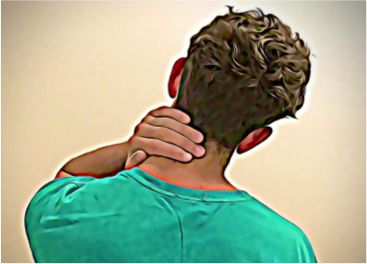
Where is your pain really coming from?

Have you ever been to see a physiotherapist for pain in one part of your body and when they treated you, they focused on a completely different area? While this can be a strange experience, it can be even more puzzling when the treatment actually works. So what is going on, shouldn’t pain be treated where it is being felt?


When pain is felt at a different location from where the pain is being caused, this is called ‘referred pain’ and is actually more common than you think. Exactly why this happens is a little complicated, and in fact, we don’t yet understand everything about the way that pain is processed.


Pain is usually felt when something causes damage to the body, sending an electrical impulse to the brain. The brain receives this information and process it to make sense of which part of the body the signal is coming from and what kind of pain it is. When the brain thinks that the pain is coming from a different area than where the damage or signal is actually coming from, this creates the phenomenon of referred pain.


Sometimes referred pain is easy to explain, such as when a nerve becomes injured or irritated, causing the pain to be felt along the length of the nerve. This often feels like a sharp, burning pain that runs in a strip, along the skin. Other examples of referred pain are more difficult to explain and in some cases seem to defy explanation. Perhaps you have heard about the strange phenomenon of phantom pain where amputees continue to feel pain as though it was in the place where their limbs used to be.


Muscular trigger points can also cause referred pain. The mechanism behind this is a bit trickier to understand, but is thought to be explained by tight bands of muscle tissues that cause pain to be felt in predictable patterns around the body.


Adding to this, we know that other tissues of the body can cause pain to be felt in a different location, including discs of the spine and internal organs. Many times the internal organs can refer pain in peculiar patterns and this can actually lead to serious illnesses being mistaken for muscular aches and pains. Kidney pain can be felt in the lower back and tragically, some people fail to recognize that they are having a heart attack because they feel pain in their neck and arm, not in their chest.


We also know that not understanding or being afraid of pain can make pain feel stronger. In rare cases, people who have pain in one hand can feel pain just by seeing their other hand moving in a mirror. There are many other fascinating aspects to pain, and understanding how it works is an important part of managing your symptoms. To understand how referred pain may be affecting you, chat to your physiotherapist who can help with any questions.


Patella Dislocation

What is it?

The knee joint is composed of the thigh bone, (femur) and leg bone (tibia) and a small floating bone at the front, commonly known as the kneecap (patella). The interaction between these bones allows for smooth movement of the knee as it bends and straightens.

During movement, the kneecap sits in a groove at the front of the knee and acts as a mechanical see-saw. This protects the knee joint and improves the efficiency of the muscles working to move it. When the patella moves out of this groove it is called a subluxation. If the patella moves far enough out of this groove it becomes a dislocation.

What are the symptoms?

The first time the patella dislocates is usually the most traumatic and painful. The knee may give way, and a visible lump can be noticed where the patella has dislocated. There will often be bruising, swelling and the knee may feel unstable. First time dislocations may also cause a heamarthrosis or bleeding within the knee joint. If there is damage to the ligaments of the knee, subsequent dislocations can happen more easily, and from everyday activities, causing the knee to give way suddenly.

What are the causes?

First time dislocations often occur due to a traumatic event. The most common cause of patellar dislocation is a non-contact injury to the knee with a twist of the leg (the thigh bone rotates internally on a fixed leg and foot). In addition, a direct blow to the side of the knee can also dislocate the patella.

If there is some instability of the joint, dislocations can occur more regularly and from smaller forces. Dislocations usually occur when the knee is bent and the kneecap slips back into place when the knee is straightened again. While the kneecap can be dislocated in both directions, it usually dislocates towards the outside of the knee.

Certain factors can make dislocation more likely, including overall hyper-flexibility, damage to the ligaments of the knee and muscular imbalance of the quadriceps. The structure and angle of the knee joint itself can also make dislocation more likely. This can be seen in the increased prevalence of dislocations for women as they have a slightly different angle of femur compared to the tibia than men. A traumatic dislocation can cause instability that can lead to future dislocations.

How can physiotherapy help?

An acute patellar dislocation should be treated like any traumatic injury and assessed by a medical professional to reduce pain and swelling, make an accurate diagnosis and check for fractures. While the kneecap may relocate itself quickly, ensuring that it is able to heal correctly to prevent further dislocations may require immobilization for up to six weeks.

Your physiotherapist will be able to identify any factors that may predispose you to further dislocations and provide you with a personalised treatment program to address any stiffness, weakness or instability surrounding the knee. Balance and proprioception (your sense of where your body is in space) are often reduced following an injury and your physiotherapist will help to rehabilitate these. Your therapist may provide you with education and advice regarding bracing or taping. In severe cases of instability, surgery may be recommended to stabilise the knee however this is usually not considered unless there has been a fracture or until a full rehabilitation with physiotherapy has been completed.

None of the information in this newsletter is a replacement for proper medical advice. Always see a medical professional for advice on your individual condition.


The Hidden Benefits Of Learning A New Skill

When thinking about getting fit and exercising more, our first thoughts are usually that we should join a gym or start jogging. While these are both worthwhile activities, studies show that if you dislike the activity you’re doing, the long-term benefits are usually not enough to keep you committed. There are a few things that are often overlooked when talking about exercising more, particularly the fact that you can often improve your life in more than one way if you find the right activity.

Finding the right activity can boost your confidence an increase your daily activity levels.

We all have different tastes in food and the same is true for exercise. Some of us chase the thrill of learning a new skill; others prefer the challenge of pushing their limits of endurance while others love being surrounded by nature. Exercise is good for everyone, but finding the right activity for you is going to make it much easier to make it a committed part of your lifestyle.

We are also more likely to enjoy doing activities that we are good at. Some people have great balance, while others have great eye hand coordination, others have great rhythm and someone who is an excellent dancer might be a terrible runner. Consider what you are personally good at and try to choose your activity based on this. Finding something that suits your routine is also an important component to making a new activity a part of your lifestyle.

Sometimes it is simply a lack of imagination that fails to get us off the couch. Jogging is not for everyone, but one of these sports might be. Here’s a quick list of less common activities that you may not have thought of trying; rock-climbing, volleyball, soccer, hula-hooping, slack-lining, golf, mountain biking, hiking, standup paddle boarding, roller skating, skateboarding, dancing, Pilates and yoga, just to name a few.

Learning new skills can be good for your brain.

Many people think that as they get older, learning new skills becomes too hard. The truth is, that with a bit of patience, you can surprise yourself with your ability to learn new things at any age. The brain is capable of incredible change and adaptation to new stimulus. Learning new things can be a great source of confidence and exercise has been shown to improve your brain function overall.

Many activities can help you meet new people and open you up to new communities.

Even solo sports often have well connected communities of like-minded enthusiasts. Surfers have surf clubs, or often meet each other in the water, rock climbers are always looking for more people to take adventures with and people who wake up at 5am to do boot camp together become great friends. As we leave high school and university, it can be harder to create new social connections. Using exercise as a way to make new friends can have a significant impact on your overall wellbeing. In many activities, the communities are extremely supportive of beginners and you might be surprised at how friendly they are to newcomers.

Your physiotherapist is able to give you great advice on which activities might suit your ability level and they can give you some tips to ensure you stay injury free when starting your new hobby.


Femoroacetabular Impingement (FAI)

What is it?

When the two surfaces of the hip joint move over each other, they usually move freely without any friction. If there is an alteration to either the socket part of the joint (the acetabulum) or the ball (the head of the femur), irritation may occur as the two surfaces move over each other. This is known as Femoroacetabular impingement, a common disorder of the hip, characterized by pain and stiffness.

Femoroacetabular impingement can be classified as cam, pincer or mixed. A cam FAI occurs when the femoral head junction is flattened or a small bump is present. Pincer type of impingement occurs when the acetabular rim extends slightly, causing the femur to be impacted. Cam impingement is more common in men while pincer impingement is more common in women. However, most cases of FAI (about 85%) are mixed, meaning they both have cam and pincer types of impingement. 

What are the symptoms?

The most common symptom of FAI is pain located in the hip or groin when resting in certain positions of with specific movements. Some patients also report pain in the back, buttock or thigh. Other symptoms include stiffness, loss of movement range (particularly of the hip), locking, clicking or a feeling that the hip is about to give way.

Activities that cause the incongruous surfaces to move over each other repeatedly are naturally the main culprits for causing symptoms. These can include prolonged sitting, twisting, sitting with crossed legs, squatting and climbing stairs can all aggravate the pain caused by femoroacetabular impingement. 

What are the causes?

There are many factors that may cause an individual to develop femoroacetabular impingement including;

  • Hip dysplasia or malformation during infancy/childhood
  • Repetitive stress on the hip
  • A femoral neck fracture that did not heal properly (malunion)
  • Small bony growths around the joint called osteophytes.
  • Normal anatomical variation

How can physiotherapy help? 

Femoroacetabular impingement is a complex condition and researchers are still determining the best possible treatment. It is thought that untreated FAI can lead to osteoarthritis of the hip down the track and there are both surgical and non-surgical options for treatment. Conservative (non- surgical) management for FAI involves core stability training, strengthening exercises for the lower limb specifically the hip and postural balance exercises. This program aims to improve the hip’s neuromuscular function. A hydrotherapy program can also helpful as it reduces weight through the joint, making movements more comfortable. Lastly, a home exercise program is made for patients, so they can continue treatment at home. For many people, physiotherapy is enough to resolve their symptoms and prevent future problems, however other may require surgery.

With surgery, hip arthroscopy is the most common procedure for this disorder and is used to change the shape of the joint slightly so that there are no points of irritation with movement. After surgery, patients are usually referred to physiotherapy for rehabilitation. 

None of the information in this post is a replacement for proper medical advice. Always see a medical professional for advice on your individual condition.


What does a physiotherapist actually do?

What does a physiotherapist do?

Many people know the value that physiotherapy brings to their life and some have even been visiting their physiotherapist since childhood. However, for those who have never been to see a physiotherapist before, there can be a question mark over exactly what it is that physiotherapists do. In fact, this is one of the most common questions physiotherapists are asked.

What is it that physiotherapists do?

The answer is tricky, because physiotherapists do so much. Primarily, we might be described as pain management experts, as we work to reduce the pain of our patients, from those who have suffered a new injury, to those who have had pain for several years. We first identify the cause of the pain and then provide manual therapy techniques, education and management strategies to help our patient understand, manage and reduce their pain.

While pain is usually the first thing that brings patients to see a physiotherapist, this pain has often caused patients to give up activities that they love and can even be getting in the way of everyday tasks. Many of us reduce our activity levels to reduce pain without even realising it. Physiotherapists are able to identify which areas you are struggling in and why this is occurring. By identifying the cause of your symptoms, we can help to get you back to full function. Physiotherapists are able to do this for everyone including elite athletes and those dealing with serious disabilities.

In fact, physiotherapists have a role to play at practically every stage of life. We can assess infants to monitor their motor skills development and as they grow we help them deal with the pains and vulnerabilities of a growing body. Among other things, we can help improve the function of athletes, assist in preventing injuries, help those with pelvic floor dysfunction and work to prevent falls in the elderly.


Not just exercises and massage.

Physiotherapists offer a range of treatments, from targeted stretches, manual therapies, dry needling, exercises and massage. Physiotherapists are also committed educators and take our role as such seriously.

A huge part of recovering from pain and injury comes from understanding what is happening and how to best manage these issues. Rather than create a dependency on their therapist, we aim to empower our patients to improve their health independently as much as possible. 

Physiotherapists aim, to improve your quality of life and remove any barriers to full participation, whether these barriers are due to pain, weakness or stiffness.


Three reasons to see your Physio

Most people associate physiotherapy with pain and injury management.  While helping you recover from pain is our specialty, physiotherapists are also able to help with many more issues.

Here are three things that you may not have thought to visit a physiotherapist for….

Stiffness and Inflexibility

Almost all of us have experienced pain and stiffness after a day of increased or unaccustomed exercise.

This kind of stiffness usually wears of quickly, and is referred to as DOMS (delayed onset muscles soreness). If however, you find yourself feeling stiff for longer periods, or even most the time – it might be time to see a physiotherapist.

There are many different causes of stiffness and inflexibility; by far the most common is lack of movement. Our joints and muscles both lose flexibility if they are not regularly moved all the way through their range.

Muscles can feel short and tight with a bouncy feeling of restriction and joints are more of a hard ‘blocked’ feeling when you try to move.

For this kind of stiffness, you may not even notice that you have lost range, as it can be very easy to adapt your movements to compensate.

Your physiotherapist can help you to identify where you have areas of inflexibility and help you to exercise, stretch and mobilise your joints to get them back to a healthy range.

Disease processes such as Osteoarthritis and Rheumatoid Arthritis can also cause prolonged stiffness and your physiotherapist is well equipped to help you deal with these conditions.

Reduced Strength or Weakness

There are many reasons for weakness in the body, from generalised disuse, weakness in one muscle group following injury, neurological weakness or structural weakness of joint following an injury.

Weakness of any kind can predispose you to future injury and can be surprisingly difficult to resolve without targeted exercises.

Your physiotherapist is able to determine the cause of your weakness and determine the best treatment to restore your muscle strength.

Reduced Balance

Keeping your balance is a very complicated process and your body works hard to make sure you stay on your feet. Humans have a very small base of support for our height and we use all our senses together to determine which movements we should make to stay upright, including our visual, vestibular, muscular and sensory systems.

As balance is so important, if one part of our senses begins to weaken, the others will quickly compensate, so you may not notice that your balance has worsened until you fall or trip over.

As a general rule, our balance deteriorates as we age but this does not mean that falls should be an inevitable part of aging.

Actively working to maintain or improve your balance can have a significant effect on your quality of life and confidence in getting around.

Your physiotherapist is able to test all the aspects of your balance and provide effective rehabilitation to help keep you on your feet.

Now if you’re experiencing anyone of these or you’re back in pain again, or if someone you love is going through this – we’re here to help you.

All you have to do is simply call us on 0405 333 921 and have a quick friendly chat to our team to find a suitable time for you to come in so we can start working on alleviating the issues.

None of the information in this article is a replacement for proper medical advice. Always see a medical professional for an assessment of your individual condition.

3 helpful stretches for the busy office worker

If you happen to have an office job, it can’t have escaped your notice that sitting has been shown to be associated with a variety of chronic health conditions. Office jobs are one the most common forms of employment in the developed world, so here are some tips to help you stay healthy when sitting all day.

Move more often:

Sitting itself and the posture you find yourself in isn’t as bad as simply being still for hours on end. An expression in physiotherapy is ‘the best posture is your next posture’. This means that, above all, movement is the best thing for your body and those in office jobs can find themselves becoming very still while focused on the next deadline.

Set a quiet alarm to remind you to move or change positions every 20 minutes. Getting up for phone calls and walking over to see colleagues when you have a question is a great way to break up your sitting time.

Reverse your posture:

While not moving is definitely the worst aspect to prolonged sitting, the postures we often adopt while sitting can also be problematic. Sitting with a flattened lower back, hunched neck and slouched shoulders is the posture that requires the least energy to maintain and is often the one we sink into in a long day. A slouched posture can lead to shortened hamstring, hip flexor and pectoral muscles.

If you are spending large amounts of time sitting, it’s important to take time every day to adopt the opposite postures and keep your body flexible.

This means moving into thoracic and lumbar extension, stretching your shoulders and extending your hips.

Here are a few stretches you can do every day while seated that will help to reverse your posture. Try to do these stretches every few hours during a working day. 

1.Chest stretch

Sit forward, clasp your hands behind your back and lift your arms towards the ceiling. You should feel a stretch at the front of your chest. Look up slightly to increase the stretch. You should not feel any pain or tingling in your arms. Hold for 30 seconds and repeat.

2.Seated hamstring stretch

Perch on the edge of your seat and straighten one leg out in front of you. Lean forwards at your hips, keeping your back straight. You should feel a gentle stretch at the back of your thigh. If you feel the stretch behind your knee or into your calf, let your ankle relax, and let your foot drop towards the floor. Hold the stretch for 20 second then swap legs, repeat this stretch with each leg twice.

3.Chin Tuck

Sit up in your chair so your bottom is at the back of your seat and your lower back is supported. Relax your shoulders and gently tuck your chin in, imagine you are holding a soft ball under your chin and are slowly squashing it. You should feel a gentle stretch at the top of your neck. Hold for 20 seconds, release and repeat.

You should not feel any pain with these stretches. Speak to your physiotherapist for a customised stretching routine that you can implement into your day at the office or for more tips on how to perform these stretches to maximum effect. None of the information in this article is a replacement for proper medical advice. Always see a medical professional for advice on your individual condition

Focus on : Tibialis Posterior Tendinopathy

The tibialis posterior muscle sits just inside the shin, halfway up the lower leg. The muscle travels downwards and runs along the inside of the heel, with the tendon attaching at the base of the arch of the foot.

The role of the tibialis posterior muscle is to move the foot and ankle downwards and towards the midline of the body. The tibialis posterior also helps to support and maintain the arch of the foot. Tendinopathy is a broad term that refers to painful pathologies of the tissues in and around a tendon, usually related to overuse.

What are the symptoms?

Signs and symptoms of tibialis posterior tendinopathy can include pain and/or stiffness over the tendon, clicking or ‘crepitus’ sounds with movement and swelling. Pain can be felt both when you touch the tendon or with movements that involve contraction of the tibialis posterior muscle, such as when going up on to your toes, hopping or running.

As the condition progresses, the tendon might be come weaker and elongated, providing less support to the arch of the foot. This might become more noticeable over time as the lack of support in the foot further aggravates the damaged tendon.

Pain may become so severe that eventually running becomes too painful to continue and even walking may be sore. In some cases, the affected tendon may be weakened but painless. For some, a complete tear of a weakened tendon can be the first sign that anything is wrong.

What are the causes?

Like most tendinopathies, overuse and biomechanical errors are the main cause of tendon pathology. Prolonged or repetitive activities that place excessive strain on the tibialis posterior tendon can cause degeneration and disorganization of collagen fibres within the tendon.

Excessive pronation or rolling in of the foot while walking can place the tendon under extra stress as it acts to support the arch. Unsupportive footwear can exacerbate this process as it allows the foot to roll inwards. Often, a person may not have any issues until they begin to increase their training. If tendons are subjected to too much load too quickly, they can begin to breakdown, developing into a tendinopathy.

Being overweight, muscle weakness or tightness, poor warm up and insufficient recovery periods can all contribute to the development of tendinopathy. As you might expect, runners are most affected by this condition, along with other athletes of sports that require lots of running. Non- athletes can also be affected with day-to-day activities causing tendinopathy.

How can physiotherapy help?

Your physiotherapist can help by making an accurate diagnosis in clinic, which can be confirmed by MRI or ultrasound. Your physiotherapist can also identify which factors may be involved in the development of this condition, helping to address them and reduce pain as quickly as possible.

For most tendinopathies, a period of relative rest is required and a graded training program to help strengthen the tendon has been shown to have the best evidence for recovery. Other interventions such as ultrasound, ice or heat treatment, soft tissue massage, stretching and joint mobilization may be used. Arch support taping, biomechanical correction, bracing and footwear advice may also be added.

None of the information in this newsletter is a replacement for proper medical advice. Always see a medical professional for advice on your individual injury.

Rheumatoid Arthritis

What is it?

Rheumatoid arthritis is a type of arthritis classified as an autoimmune disease. Autoimmune disorders are conditions where the immune system of the body mistakenly attacks healthy tissues. This process of inflammation, the bodies defence system against injury and infection can damage joints and cause deformity over a long period of time. Unlike osteoarthritis, which usually affects larger joints that are involved in weight bearing, rheumatoid arthritis can affect many joints at the same time, with smaller and larger joints affected equally.

What are the symptoms?

Rheumatoid arthritis is a chronic disease, characterized by periods of remissions and flare-ups. During a flare-up, joints might become red, hot, swollen and painful. During a remission a patient might have few symptoms, however over many years, these flare-ups can degrade and deform joints, causing them to lose function and the muscles around them to weaken.

The symptoms of rheumatoid arthritis vary from mild to severe and as mentioned, can fluctuate significantly over time. As movement can help to reduce swelling caused by inflammation, pain can actually increase as joints are rested. A person with rheumatoid arthritis may complain of pain and stiffness that is worst when waking and may take 1-2 hours to subside.

What are the causes?

While rheumatoid arthritis is known to be a process of autoimmune dysfunction, the trigger that causes the immune system attack healthy tissues is unknown. In some cases, a virus may trigger the onset of the disease. There is evidence that women have a stronger immune system than men, and a downside of this is that they are more prone to autoimmune disorders, as is the case with Rheumatoid Arthritis.

 Other risk factors associated with rheumatoid arthritis include a family history of rheumatoid arthritis, obesity and smoking.

How can physiotherapy help?

While there is no cure at present for the disease process that causes rheumatoid arthritis, there are treatments that can improve the patient’s quality of life and help to manage the symptoms. The first line of treatment for rheumatoid arthritis is medication particularly, anti-inflammatory medications. Change in lifestyle and diet are also advised.

The objectives of physiotherapy treatment for rheumatoid arthritis are to improve joint mobility, increase strength, restore the function of the affected joints and to maintain the level of activity of the patient. Physiotherapy treatments include heat or cold therapy, hydrotherapy, therapeutic exercises, pain management, manual techniques and patient education. Splinting may be done to protect joints from further damage. Patient education is an important part of the treatment so that the patient is knowledgeable about his/her disease, what to do and not to do.

All of these treatments can help reduce the potential long-term disabilities caused by rheumatoid arthritis. Speak to your physiotherapist for more information.