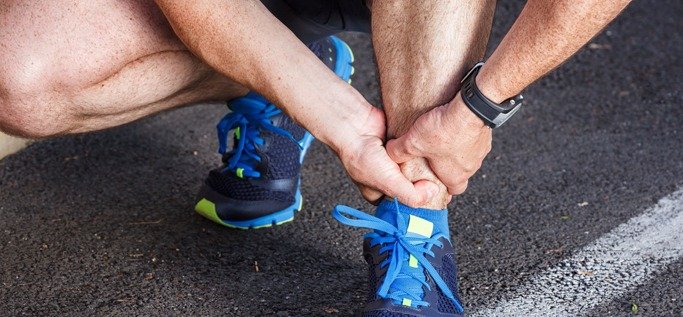
Ankle Sprains

What is it?

Almost everyone has twisted their ankle at some in their life; in fact, it is one of the most common reasons for people to visit an emergency department. Technically an ankle sprain has occurred when an ankle twists, causing damage to one of it’s supporting ligaments. The ligaments can be overstretched, partially torn or completely ruptured, depending on the force of the injury. The ligament that is most often involved is the ATFL, or the anterior-talofibular ligament, located on the outside of the ankle.

While there are many ligaments surrounding and supporting the ankle, this ligament is the most vulnerable as it stops the ankle from rolling inwards, which is the way that most ankles are injured. Athletes who jump while moving in different directions, such as basketball players, are the most prone to this injury as they often land on their foot when it is not completely flat, twisting it and injuring the ligaments.

What are the signs and symptoms?

Most people won’t have any problem diagnosing that they have a sprained ankle. The symptoms are pain, swelling and tenderness over the area of damage, usually the outside of the ankle. Depending on the severity of the injury, there many be bruising, reduced range of movement, instability and pain with weight bearing. In more severe injuries there may even be a loss of function, where you are unable to walk on the ankle and numbness and/or a feeling of coldness in the foot.

Why should I see a physiotherapist?

Twisted ankles can also cause a fracture of the ankle, not just ligament damage and many times a bad sprain and a fracture cannot be told apart without proper medical assessment and an X-ray. Your physiotherapist is able to identify if your sprain is severe enough to need further investigation to rule out a fracture. They will also classify the severity of the sprain, providing you with a clear course of treatment. There are many factors that can lead someone to be more prone to fractures, including general hyper flexibility, unsupportive footwear and anatomical structure, however by far the most common reason for an ankle sprain is the existence of a previous sprain without complete rehabilitation.

This is because following an ankle sprain, many people are left with weakness, instability or stiffness, reduced balance and proprioception – which is a sense of where your body is positioned. These things can mean that the next time your ankle is in a vulnerable position you don’t have the strength, awareness of position, balance or structural control to ensure it is in the correct position before putting all your weight through it, causing another injury.

As well as helping you reduce and recover from the pain and swelling of the injury in the early days. Your physiotherapist is trained to identify which issues are likely to affect you in the future and assist you with a personalized rehabilitation program to ensure your ankle is as strong and stable as possible to prevent future injuries.

None of the information in this post is a replacement for proper medical advice. Always see a medical professional for advice on your individual condition.
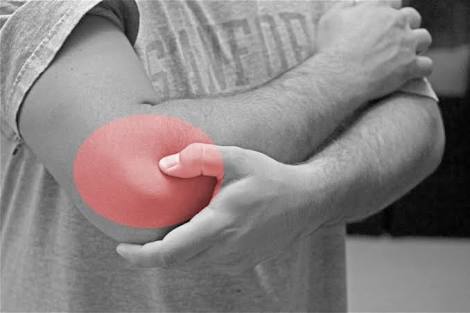


Focus on : Tennis Elbow

What is Tennis Elbow?

Tennis elbow, also known as Lateral Epicondylitis, is a common condition characterised by pain at the outside of the elbow with movements of the wrist and hand.

The pain is usually localised to the tendon of a small muscle of the forearm just below the elbow called Extensor Carpi Radialis Brevis (ECRB).

This muscle is responsible for extending the wrist back into a “stop” position and is active when gripping and moving objects.

While the term ‘tennis elbow’ is used because this is a common injury for tennis players, anyone who performs repetitive tasks with their hands and wrists can be susceptible, including office workers and manual labourers.

What are the signs and symptoms?

The cardinal sign of tennis elbow is pain felt on the outside of the elbow, particularly when making wrist movements or when gripping an object.

Symptoms may occur suddenly or appear gradually over time. In the early stages, pain may be present with activity and quickly go away with rest, however, as it progresses the pain may be more constant, lasting for longer and occurring with smaller movements.

If pain has persisted for three months then it is considered to be a chronic condition. As with most injuries, the longer an issue has been present, the longer it usually takes to resolve.

Other symptoms can include night pain, stiffness in the elbow and forearm, weakness, numbness and pins and needles. As symptoms progress, simple tasks such as lifting a cup can be painful, which can have a significant impact on your lifestyle.

What causes it?

While tennis elbow was originally thought to be due an inflammation process, it appears that this is not the case, rather there is an increased sensitivity to the area along with changes to the blood supply and disorganization of the collagen fibres that make up the tendon.

These changes are an adaptation to excess loading of the tendons attaching to the elbow, particularly the ECRB.

Most of the time, this happens because of small repetitive movements that are done with poor ergonomics or technique. If the health of the tendon tissue is compromised, this can also contribute to the development of tennis elbow.

Poor nutrition, disuse, inflammatory diseases and aging can all mean that the tendon is less able to adapt to forces and are a risk factor for the development of tennis elbow.

How can Addlife Physio help?

Your physiotherapist will first confirm that you are indeed suffering from tennis elbow, which is an important step as some neck conditions can present with similar symptoms.

Once the diagnosis has been confirmed, we will determine the severity and causes of your particular condition, testing your grip and individual muscle strength.

We can also identify any muscle tightness, postural or ergonomic flaws and joints stiffness that may be contributing to your condition.

Treatment may include, fitting of a brace, dry needling, strengthening with eccentric exercises and stretching.

Depending on the cause of your tennis elbow, your physio may suggest a change in the setup of your desk, workplace, or grip technique of your racket or hand-held tool.

Eccentric exercises load the muscles in a very specific way and research has shown that these exercises can help strengthen tendon tissues, reducing symptoms of tennis elbow.

It is normal for tennis elbow to take a few weeks or even months to heal. If conservative management is not having a good effect, your physio can help you speak to your doctor about other management techniques.

As tennis elbow is a progressive condition that generally does not resolve on its own, it is recommended to seek treatment sooner rather than later, as recovery is much faster when started early.

If you or anyone you love are experiencing Tennis elbow, we understand the frustration of the nagging pain and depending on the situation, we can help alleviate it for you and get you back to your best.

All you have to do is call us on 0405 333 921 and have a quick, friendly chat with our team to organise a convenient time so we can help you get back to 100% before you know it.

None of the information in this article is a replacement for proper medical advice. Always see a medical professional for an assessment of your individual condition.

Physio Kalgoorlie

When Will My Injury Heal?


When injury strikes, the first thing that most of us want to know is ‘how long will this take to heal?’ Unfortunately, the answer to this can be complicated and requires at least a little understanding of how the different tissues of the body heal. Each of the tissues of the body, including muscles, tendons, ligaments and bone, heal at different speeds and each individual will have some variation on those times as a result of their individual health history and circumstances.


Understanding the type of tissue injured and their different healing times is an important part of how your physiotherapist approaches treatment and setting goals for rehabilitation. On an individual level, a patient’s age, the location and severity of the injury and the way the injury was managed in the first 48 hours all affect the healing times of an injury. Unfortunately, as we age, injuries do tend to heal more slowly than when we are young. Any medical condition that reduces blood flow to an area, such as peripheral vascular disease, can also reduce the body’s ability to heal at its usual rate.


There are some guidelines that can be followed when predicting how long an injury will take to heal based on the tissue type affected. Muscles are full of small capillaries, giving them a rich blood supply, and as such, they have a comparatively fast healing time with 2-4 weeks for minor tears. This time will be extended for larger tears and more complicated presentations.


Ligaments and tendons have less access to blood supply and tears to these tissues generally take longer to heal. Larger or complete tears of all soft tissues, may not be able to heal themselves and in rare cases, surgery may be required for complete healing to occur. Similarly, cartilage, the flexible connective tissue that lines the surface of joints is avascular, which means it has little or no blood supply. To heal, nutrients are supplied to the cartilage from the joint fluid that surrounds and lubricates the joint.


While the different tissues of the body all have different healing times, they do follow a similar process of healing with three main stages, the acute inflammatory phase, the proliferative stage and finally the remodeling stage.


The inflammatory stage occurs immediately after an injury and is the body’s primary defense against injury. This stage is identifiable by heat, redness, swelling and pain around the injured area. During this phase the body sends white blood cells to remove damaged tissue and reduce any further damage. This stage usually lasts for 3-5 days.


The proliferation stage is the phase where the body starts to produce new cells. Swelling and pain subsides and scar tissue is formed that eventually becomes new tissue. This stage usually occurs around days 7-14 following an injury.


The final stage, known as the remodeling stage is when the body completes healing with the reorganization of scar tissue and the laying down of mature tissue. This stage usually occurs roughly two weeks after the initial injury is sustained.


At each stage of the healing process a different treatment approach is required and your physiotherapist can help to guide you through your recovery.

Ask your physiotherapist to explain how your injury can be managed best and what to expect in your recovery process.


Avoiding Low Back Injuries With Squatting

Let’s talk about a tip to get rid of lower back pain from squats. In most cases, pain from squatting comes to technical errors; whether the pain is in the lower back or in the knees.

Sometimes, the lower back pain can actually originate from the hips.

So make sure to use correct form while you’re squatting to avoid injury.

If you want to find out how, simply book an appointment and we’ll show you how in our next session together.