Acute Wry Neck

Have you ever woken up with an inexplicably stiff and painful neck that will only turn to one side? You might have been suffering from acute wry neck, a painful condition following a typical pattern of symptoms. In the clinic, wry neck is classified as one of two different types – Facet or Discogenic wry neck.


Facet Wry Neck:

Facet joints are found on either side of the spine and allow controlled rotation and side bending of the neck. An awkward or sudden movement of the neck can cause a part of the joint capsule to tear or get caught in the joint, making it feel locked. The muscles around the area can also become tight and spasm, which amplifies the pain. The pain is usually sharp and can be pinpointed quite accurately to the part of the neck causing the problem, and the pain rarely travels down into the arm. It is usually possible to find a resting position where the pain goes away completely, only having pain when turning in specific directions. The good news about Facet Wry Neck is that your physiotherapist is usually able to help you ‘unlock’ the neck quite quickly with gentle mobilisations. Most of the time, a full recovery can be expected within a week.


Discogenic Wry Neck: 

The vertebrae of the neck are separated from each other by fibrous discs, filled with a gelatinous centre. These discs provide support, flexibility and shock absorption. When placed under pressure, these discs may bulge or tear, and the resulting swelling can cause pain and muscle spasm in the surrounding area. It is important to note that in an area as sensitive as the neck, a small amount of damage can result in a large amount of pain.

The development of discogenic wry neck is usually due to a combination of factors, including neck stiffness, poor posture and biomechanics than can contribute to the disc being vulnerable prior to the injury. In this case, it can be challenging to find a comfortable position, and it is more likely for the pain to travel into the arm and include pins and needles.

Treatment of discogenic wry neck is focused on reducing pain and muscle spasm with massage, taping, heat and postural education. Further treatment aims to reduce any stress that is being placed on the disc, mobilise any stiff spinal segments and correct any muscle imbalances. While the initial symptoms may settle down quite quickly, it can take up to six weeks to fully recover from discogenic wry neck. In this condition, it is also essential to address all the factors that may cause a recurrence of the issue.


The information in this newsletter is not a replacement for proper medical advice. Always see a medical professional for an assessment of your condition. 
The Two Minute Workout Challenge

Keeping active while at home for long periods can be challenging. For many people, going out for a run or taking time to perform a full workout can be daunting, especially if this is not a part of their usual routine. 


There are a few quick and easy ways to add some movement to your day, starting with something as simple as boiling the kettle. As the average kettle takes 2-3 minutes to boil, challenge yourself to see if you can complete these five exercises while waiting for your cup of tea. You can focus on one each day, or work through one different one each time.


1.Challenge your balance. 

Standing on one leg is something many of us assume we can do, yet rarely take the time to check. This is an essential skill that can deteriorate without being noticed until everyday activities, such as getting dressed, are impacted. Being able to stand on one leg is important for putting on shoes, trousers and reduced balance can be a risk factor for falls.

Start by seeing if you can stand on one leg with your eyes open for the entire time the kettle is boiling. Test both legs and if this is too difficult, make sure you are close to a bench that you can use to support yourself. To increase the difficulty, try balancing with your eyes closed, then progress to balancing on your tiptoes. If you can balance on your tiptoes, with your eyes closed, then you may need to ask your physio for more suggestions.


2.Heel Raises

Start by keeping your knees slightly bent and lift both heels off the ground at the same time. You can begin with repetitions of 5, have a quick rest then repeat. Challenge yourself to increase the speed of your heel raises and see how many you can fit into your waiting time. As you bend your knees, aim to keep your knees over your second toe. If you feel this is a little too easy, you can progress to single-leg heel raises, which will also improve your balance!

You can start a daily competition with the people in your household to see who can complete the most.


3.Squats

Squats are a great exercise to keep your large muscles working. You can start with small squats and reps of 5, aiming to slowly increase your number and progressively squat to a lower position. As with heel raises, when you start to find squats to be less of a challenge, you can move to single-leg squats.


Don’t hesitate to ask one of our physios for tips on how to stay active while at home. The information in this newsletter is not a replacement for proper medical advice. 

Keeping Healthy While Working from Home

Over the next few months, many of us will be spending more time at home. For each of us, this will mean something different; however, regardless of your circumstances, there are a few things you can do to make your time at home a little easier and healthier. 


Maintain a routine. 

A new routine may take a while to develop and will depend on the demands placed on you by your work or children, however, some things can help with both mental and physical health when staying at home for long periods. Waking up and going to sleep at the same time every day can have a significant impact on wellness, ensuring that you have a better sleep and also feel more settled when you wake up.


Use screens thoughtfully. 

Technology can help us to connect with those who are not there, yet can also take us away from things happening around us. Delete the apps that you find distracting, such as news or social media and schedule in quality catch-ups with friends and family via video.


Take time to adjust your home workstation.

If you will be spending hours at a time on your computer, it is essential to take the time to ensure your workstation is set up optimally to reduce stress on your body while working. You can chat with your physiotherapist for some tips on how to set up your home office.


Stay in touch with your physio.

If you are struggling with pain at home, your physiotherapist can offer a variety of online treatment solutions, even if you can’t make it to the clinic. Reach out to your physiotherapist if you are in pain either via email or telehealth sessions to see how they can help you – you might be surprised at how much they can help.


Join an online fitness group and workout with others.

Joining a daily online workout session is one way to keep active and also stick to a schedule. Many of the videos allow you to join in live, helping to increase commitment and a sense of community with your fellow athletes.


Stretch before bed. 

Start with just three simple stretches, calf, hamstrings and triceps and slowly build up your repertoire. Stretching before bed can help to prepare your body for rest while also improving flexibility. Try to hold each stretch for at least 30 seconds for optimal effect.

Ankle Sprains

What is it?

Almost everyone has twisted their ankle at some in their life; in fact, it is one of the most common reasons for people to visit an emergency department. Technically an ankle sprain has occurred when an ankle twists, causing damage to one of it’s supporting ligaments. The ligaments can be overstretched, partially torn or completely ruptured, depending on the force of the injury. The ligament that is most often involved is the ATFL, or the anterior-talofibular ligament, located on the outside of the ankle.

While there are many ligaments surrounding and supporting the ankle, this ligament is the most vulnerable as it stops the ankle from rolling inwards, which is the way that most ankles are injured. Athletes who jump while moving in different directions, such as basketball players, are the most prone to this injury as they often land on their foot when it is not completely flat, twisting it and injuring the ligaments.

What are the signs and symptoms?

Most people won’t have any problem diagnosing that they have a sprained ankle. The symptoms are pain, swelling and tenderness over the area of damage, usually the outside of the ankle. Depending on the severity of the injury, there many be bruising, reduced range of movement, instability and pain with weight bearing. In more severe injuries there may even be a loss of function, where you are unable to walk on the ankle and numbness and/or a feeling of coldness in the foot.

Why should I see a physiotherapist?

Twisted ankles can also cause a fracture of the ankle, not just ligament damage and many times a bad sprain and a fracture cannot be told apart without proper medical assessment and an X-ray. Your physiotherapist is able to identify if your sprain is severe enough to need further investigation to rule out a fracture. They will also classify the severity of the sprain, providing you with a clear course of treatment. There are many factors that can lead someone to be more prone to fractures, including general hyper flexibility, unsupportive footwear and anatomical structure, however by far the most common reason for an ankle sprain is the existence of a previous sprain without complete rehabilitation.

This is because following an ankle sprain, many people are left with weakness, instability or stiffness, reduced balance and proprioception – which is a sense of where your body is positioned. These things can mean that the next time your ankle is in a vulnerable position you don’t have the strength, awareness of position, balance or structural control to ensure it is in the correct position before putting all your weight through it, causing another injury.

As well as helping you reduce and recover from the pain and swelling of the injury in the early days. Your physiotherapist is trained to identify which issues are likely to affect you in the future and assist you with a personalized rehabilitation program to ensure your ankle is as strong and stable as possible to prevent future injuries.

None of the information in this post is a replacement for proper medical advice. Always see a medical professional for advice on your individual condition.


Focus on : Tennis Elbow

What is Tennis Elbow?

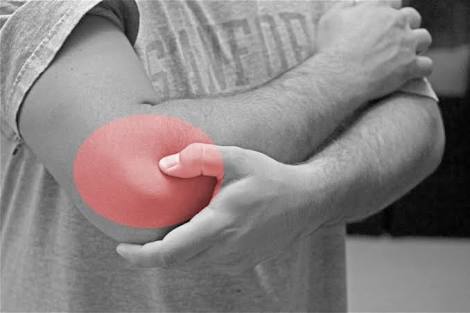
Tennis elbow, also known as Lateral Epicondylitis, is a common condition characterised by pain at the outside of the elbow with movements of the wrist and hand.

The pain is usually localised to the tendon of a small muscle of the forearm just below the elbow called Extensor Carpi Radialis Brevis (ECRB).

This muscle is responsible for extending the wrist back into a “stop” position and is active when gripping and moving objects.

While the term ‘tennis elbow’ is used because this is a common injury for tennis players, anyone who performs repetitive tasks with their hands and wrists can be susceptible, including office workers and manual labourers.

What are the signs and symptoms?

The cardinal sign of tennis elbow is pain felt on the outside of the elbow, particularly when making wrist movements or when gripping an object.

Symptoms may occur suddenly or appear gradually over time. In the early stages, pain may be present with activity and quickly go away with rest, however, as it progresses the pain may be more constant, lasting for longer and occurring with smaller movements.

If pain has persisted for three months then it is considered to be a chronic condition. As with most injuries, the longer an issue has been present, the longer it usually takes to resolve.

Other symptoms can include night pain, stiffness in the elbow and forearm, weakness, numbness and pins and needles. As symptoms progress, simple tasks such as lifting a cup can be painful, which can have a significant impact on your lifestyle.

What causes it?

While tennis elbow was originally thought to be due an inflammation process, it appears that this is not the case, rather there is an increased sensitivity to the area along with changes to the blood supply and disorganization of the collagen fibres that make up the tendon.

These changes are an adaptation to excess loading of the tendons attaching to the elbow, particularly the ECRB.

Most of the time, this happens because of small repetitive movements that are done with poor ergonomics or technique. If the health of the tendon tissue is compromised, this can also contribute to the development of tennis elbow.

Poor nutrition, disuse, inflammatory diseases and aging can all mean that the tendon is less able to adapt to forces and are a risk factor for the development of tennis elbow.

How can Addlife Physio help?

Your physiotherapist will first confirm that you are indeed suffering from tennis elbow, which is an important step as some neck conditions can present with similar symptoms.

Once the diagnosis has been confirmed, we will determine the severity and causes of your particular condition, testing your grip and individual muscle strength.

We can also identify any muscle tightness, postural or ergonomic flaws and joints stiffness that may be contributing to your condition.

Treatment may include, fitting of a brace, dry needling, strengthening with eccentric exercises and stretching.

Depending on the cause of your tennis elbow, your physio may suggest a change in the setup of your desk, workplace, or grip technique of your racket or hand-held tool.

Eccentric exercises load the muscles in a very specific way and research has shown that these exercises can help strengthen tendon tissues, reducing symptoms of tennis elbow.

It is normal for tennis elbow to take a few weeks or even months to heal. If conservative management is not having a good effect, your physio can help you speak to your doctor about other management techniques.

As tennis elbow is a progressive condition that generally does not resolve on its own, it is recommended to seek treatment sooner rather than later, as recovery is much faster when started early.

If you or anyone you love are experiencing Tennis elbow, we understand the frustration of the nagging pain and depending on the situation, we can help alleviate it for you and get you back to your best.

All you have to do is call us on 0405 333 921 and have a quick, friendly chat with our team to organise a convenient time so we can help you get back to 100% before you know it.

None of the information in this article is a replacement for proper medical advice. Always see a medical professional for an assessment of your individual condition.

Avoiding Low Back Injuries With Squatting

Let’s talk about a tip to get rid of lower back pain from squats. In most cases, pain from squatting comes to technical errors; whether the pain is in the lower back or in the knees.

Sometimes, the lower back pain can actually originate from the hips.

So make sure to use correct form while you’re squatting to avoid injury.

If you want to find out how, simply book an appointment and we’ll show you how in our next session together.

Read This Tip For Long Car Rides

Remaining in a seated position for extended periods of time can restrict blood flow to your lower extremities, causing flexion, which is a compressive force in the spine.

Stopping to stand and stretch is critical for your spine, as it releases the compression, allows for blood to flow to the nerves, and helps maintain flexibility which is very important.

How Physiotherapy Can Prevent Injuries

Customized physiotherapy may be a useful way to ease low back pain, which affects an estimated 31 million Americans a new study says. Researchers from La Trobe University observed that ‘many patients with low-back disorders persisting beyond 6 weeks do not recover.

Contact us now to make sure this doesn’t happen to you.